A woven wall hanging with cattails and wormwood
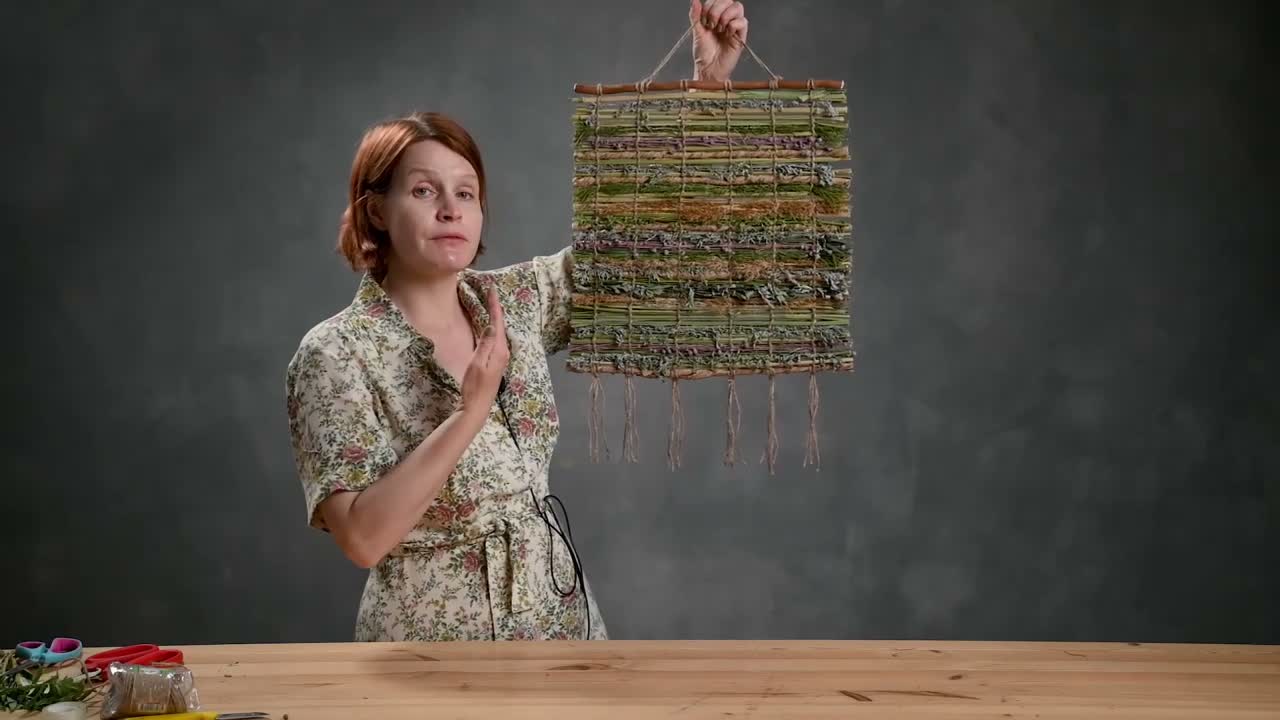
The stripes in this hanging are made of stems. Follow the weaving on a dry branch and see how dense cattails, finer wormwood and fluffy reed plumes change the texture from row to row.
What makes this project distinctive
Two wormwood sprigs face opposite ways to balance the thickness of a row; twisted paper, horsetail and reed plumes vary the rhythm of the bands.
Programme
Stages shown in the recording
- 00:05MaterialsChoose cattail as the main material and add wormwood, dried flowers and reeds.
- 01:53Wooden supportChoose a dry, sturdy branch for the top of the wall hanging.
- 02:28Kraft paper twistsTwist the paper into strips of even thickness.
- 05:03TwinePrepare five pairs of doubled threads for weaving.
- 05:40Attaching the threadsTie the pairs to the branch at even intervals.
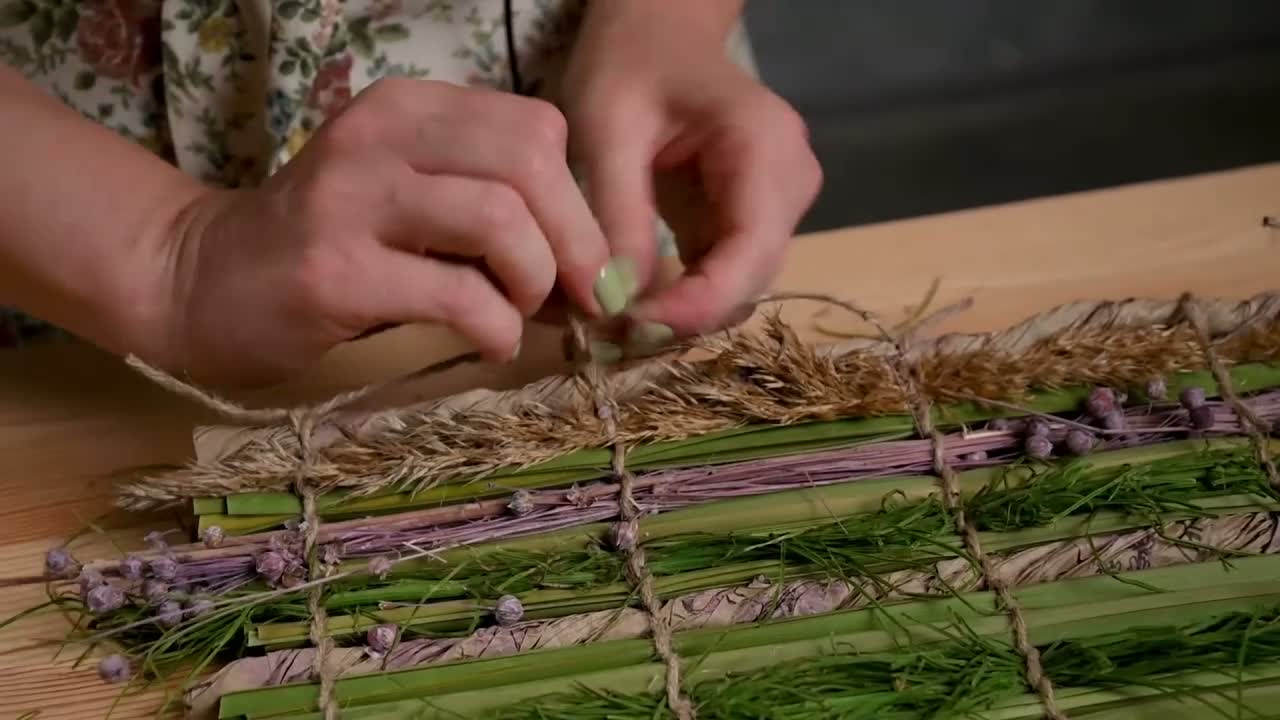
- 06:45First rowsTie bundles of partly dried cattail into the weaving.
- 08:37WormwoodPair the thick and thin ends of two branches.
- 09:54Material rhythmAlternate cattail with groups of dried flowers by colour.
- 11:12Paper and horsetailAdd kraft paper twists and evenly sized bundles of horsetail.
- 13:39Reed plumesAdd fluffy dried reed plumes to the weaving.
- 14:17Extending and finishing threadsSee how to extend the threads and finish the knots.
- 14:59TasselsTie the decorative ends at the bottom.
- 15:56Hanging loopTrim the edges and make a loop for hanging.
Preparation
Materials and tools
- Dry wooden stick
- twine
- cattail
- wormwood
- dried flax
- horsetail
- reed plumes
- kraft-paper cords
- cutting tools
What you will make
What the recording covers
Five pairs of twine strands are tied to the branch at even intervals. The first rows show how each pair catches a bundle and holds the stems across the hanging.
The instructor shows how to extend the twine, finish the knots, add tassels and make a hanging loop.
Who it is for
- For anyone who wants to work with gathered dry plant material.
The recording follows one wall hanging through to making its hanging loop.