Project idea
How to Choose a Dried Flower Gift That Fits the Person
Think about the person, the occasion and the place for the flowers. Eleven dried flower projects offer different ways to make that choice personal.
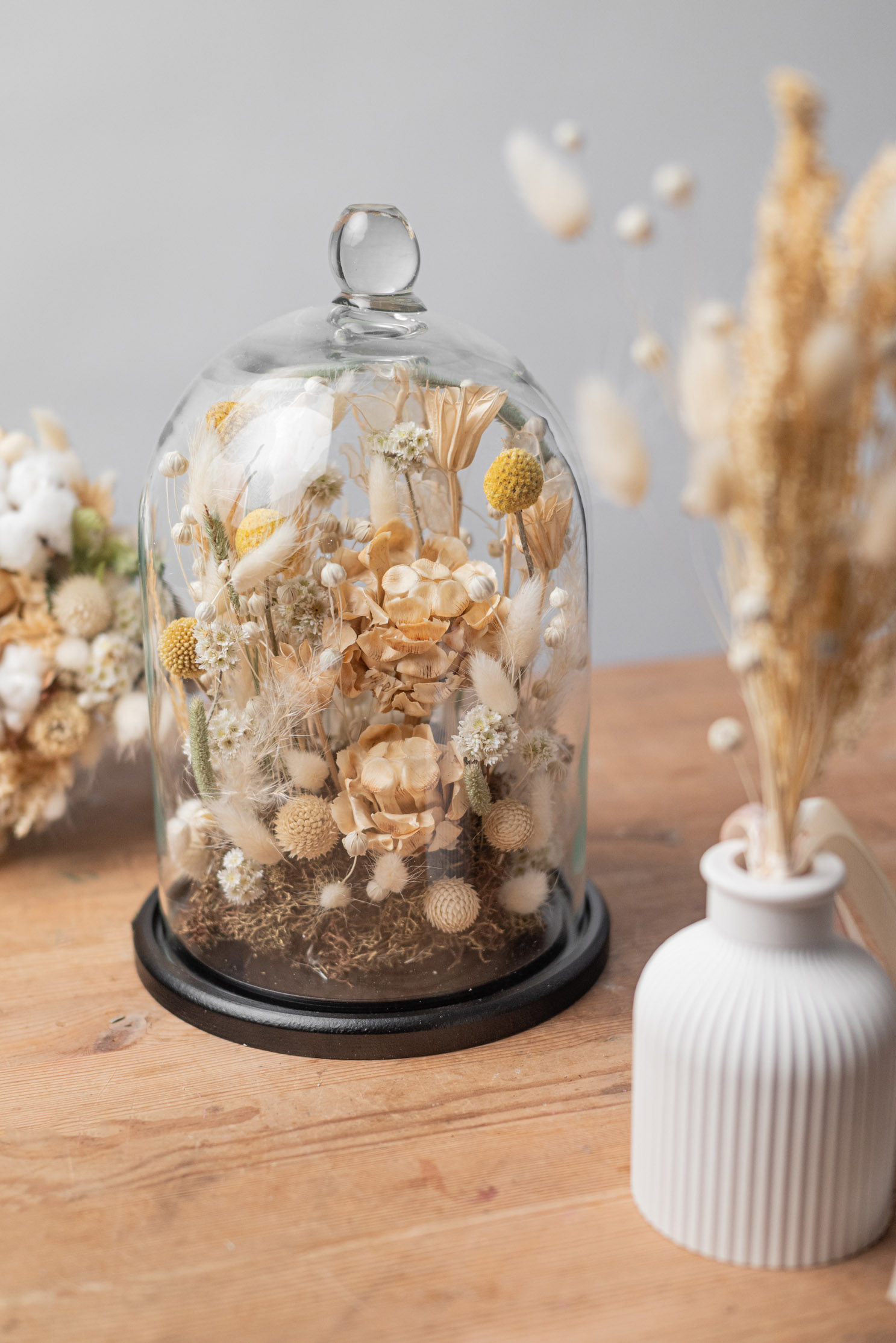
Choosing a dried flower gift gets easier when you picture the person receiving it. Do they enjoy arranging objects on a shelf, setting a table for friends or choosing small details for a special outfit? Those habits tell you more than a generic list of gifts for a birthday or a housewarming.
The eleven projects here are references for that decision, from a composition under glass to a large hanging installation. They are not eleven interchangeable presents. Use them to explore what would suit a particular person and occasion, then follow the photographs for the individual project details.
Start with how they enjoy flowers
Imagine a friend who always notices the little objects on a windowsill or a shelf. A dried flower composition under a glass cloche might appeal to that interest in a contained display: the outer shape is visible as well as the flowers inside. For someone drawn first to the flowers themselves, a European round dried flower bouquet offers another reference, with its rounded floral outline.
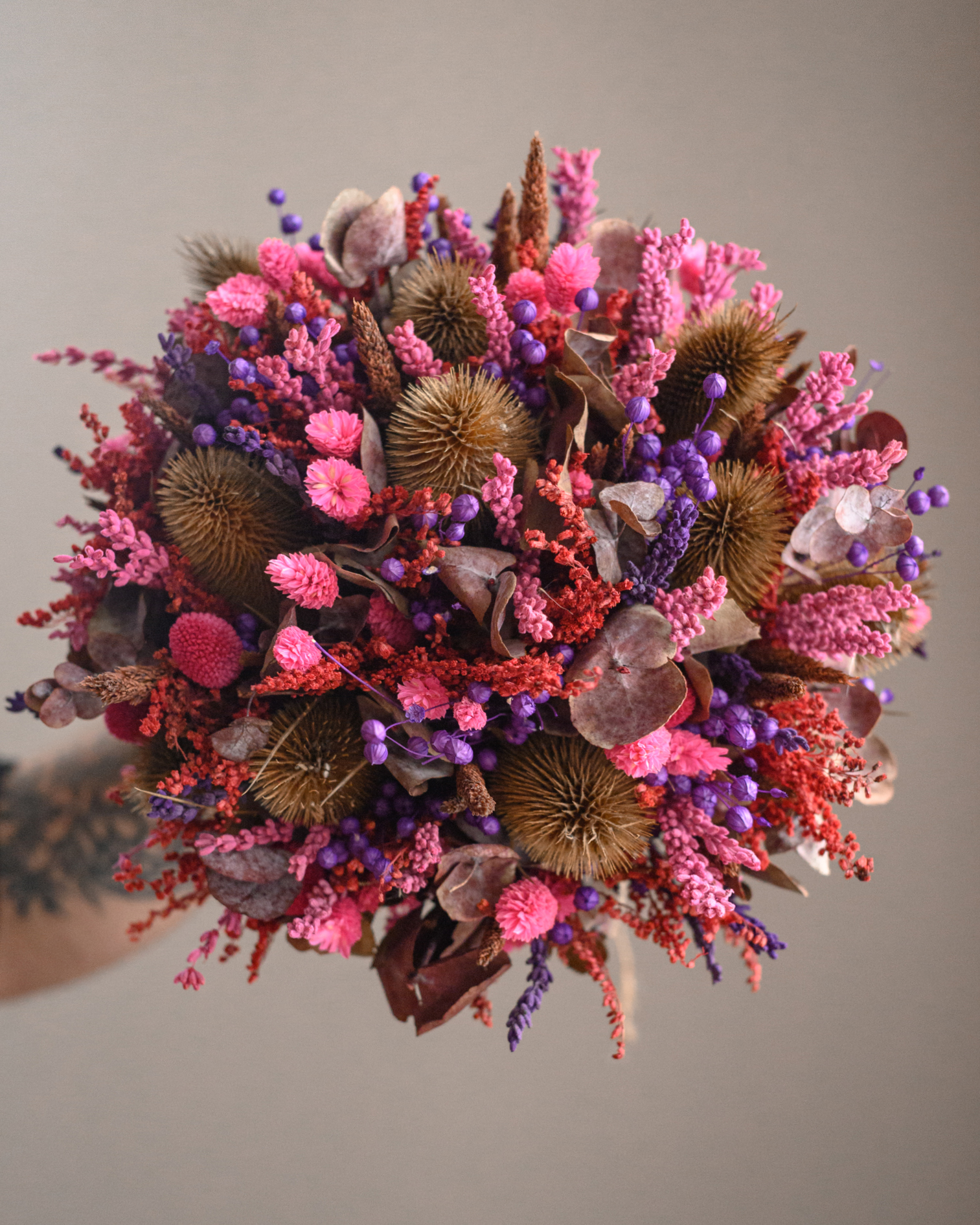
Try this: think of one object the person chose for themselves. Describe what they seem to like about it: a neat outline, an unusual texture or perhaps an expressive shape. Use that observation as a starting point, without assuming you know all their preferences.
Let the occasion make the choice more personal
Some floral gifts are about a moment rather than a place in the home. A ribbon-finished dried flower boutonniere is a small detail worn on a jacket. A floral bracelet on a wire frame brings the flowers to the wrist. Their scale makes you look differently at balance and the relationship between an accessory and an outfit.
A dried flower bridal bouquet has a more prominent role. For a wedding, these are choices to make with the person who will wear or carry the flowers. They can inspire a thoughtful conversation, but they should not be a surprise that replaces the couple’s own plans.
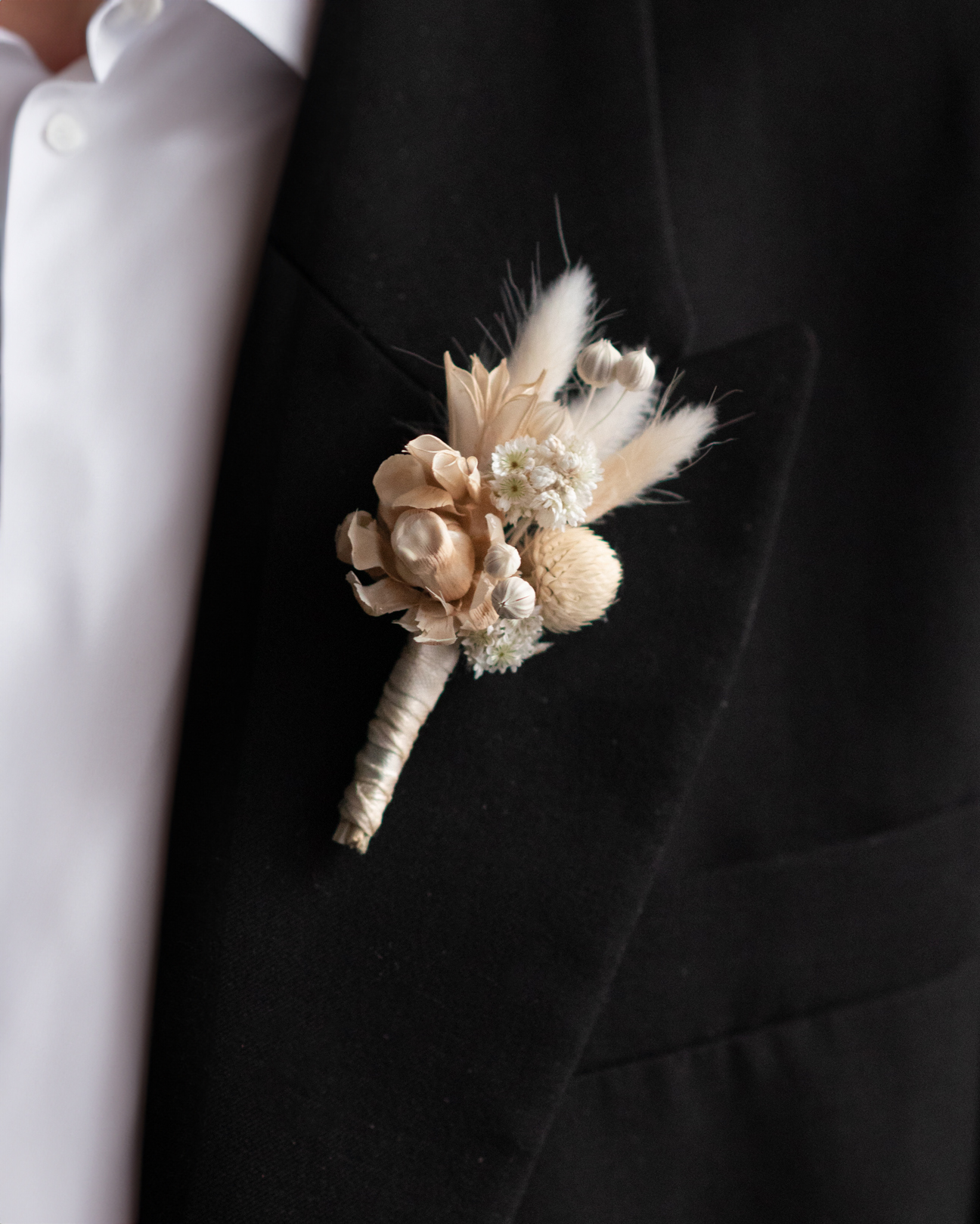
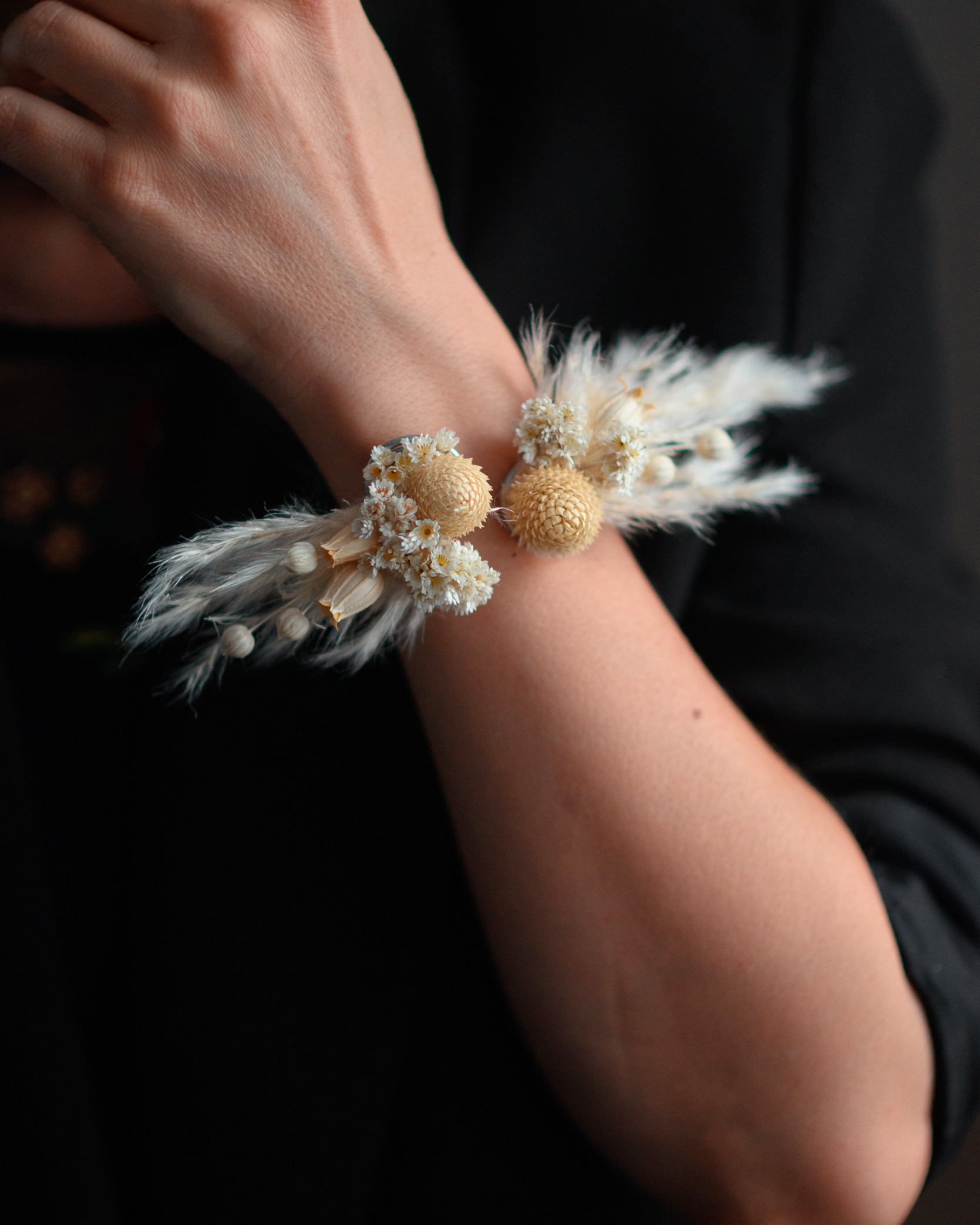
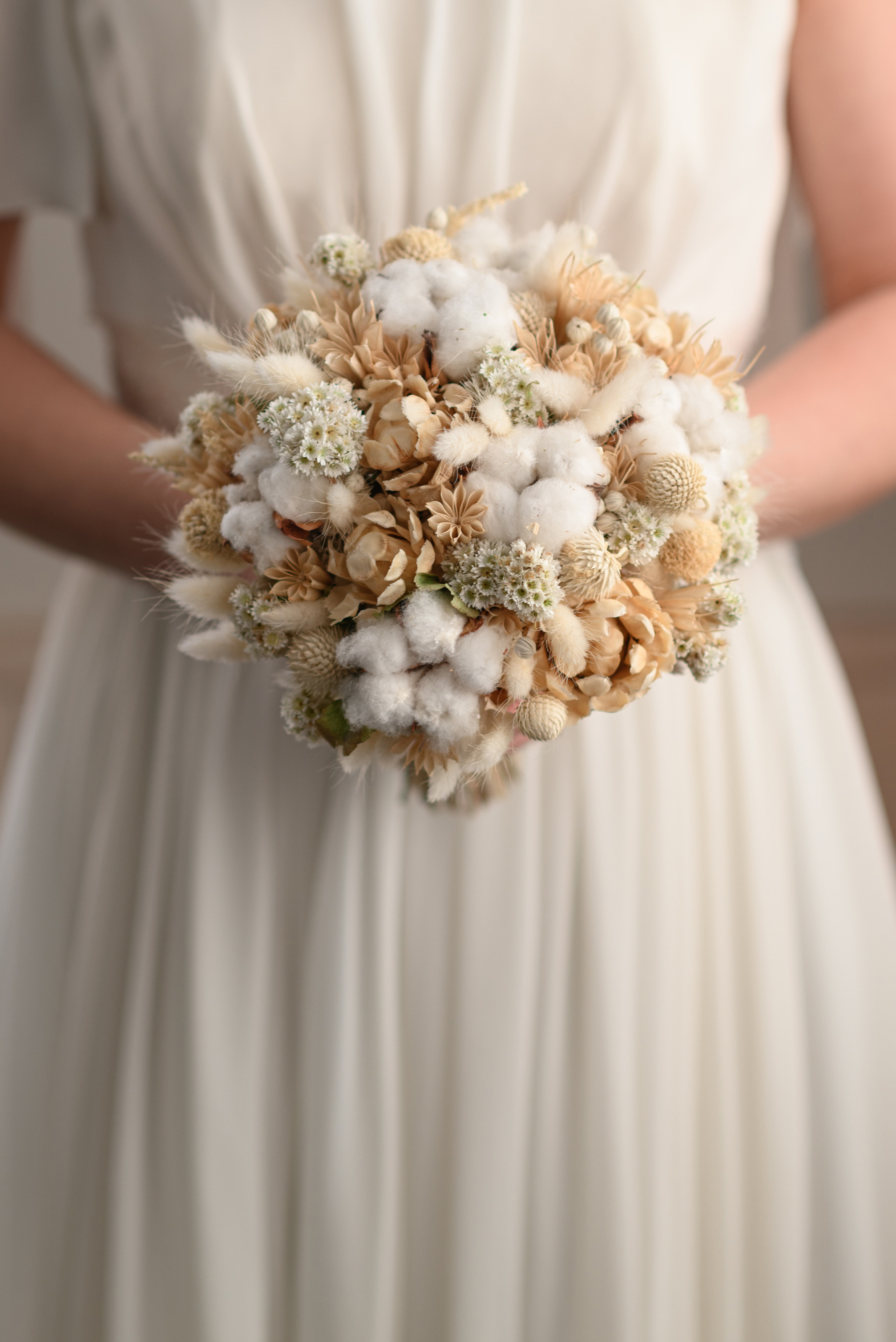
Try this: share two photographs and ask what feels right about each. A specific comparison often makes the conversation easier than asking someone to describe their entire floral style.
Picture where the gift will be enjoyed
For someone who likes gathering people around a table, floral shape is only part of the decision. The table still needs to work for the way they use it. A round dried flower table arrangement and a larger spreading composition offer two outlines to compare. The larger project was made for a restaurant table; that context matters when imagining it in a different space.
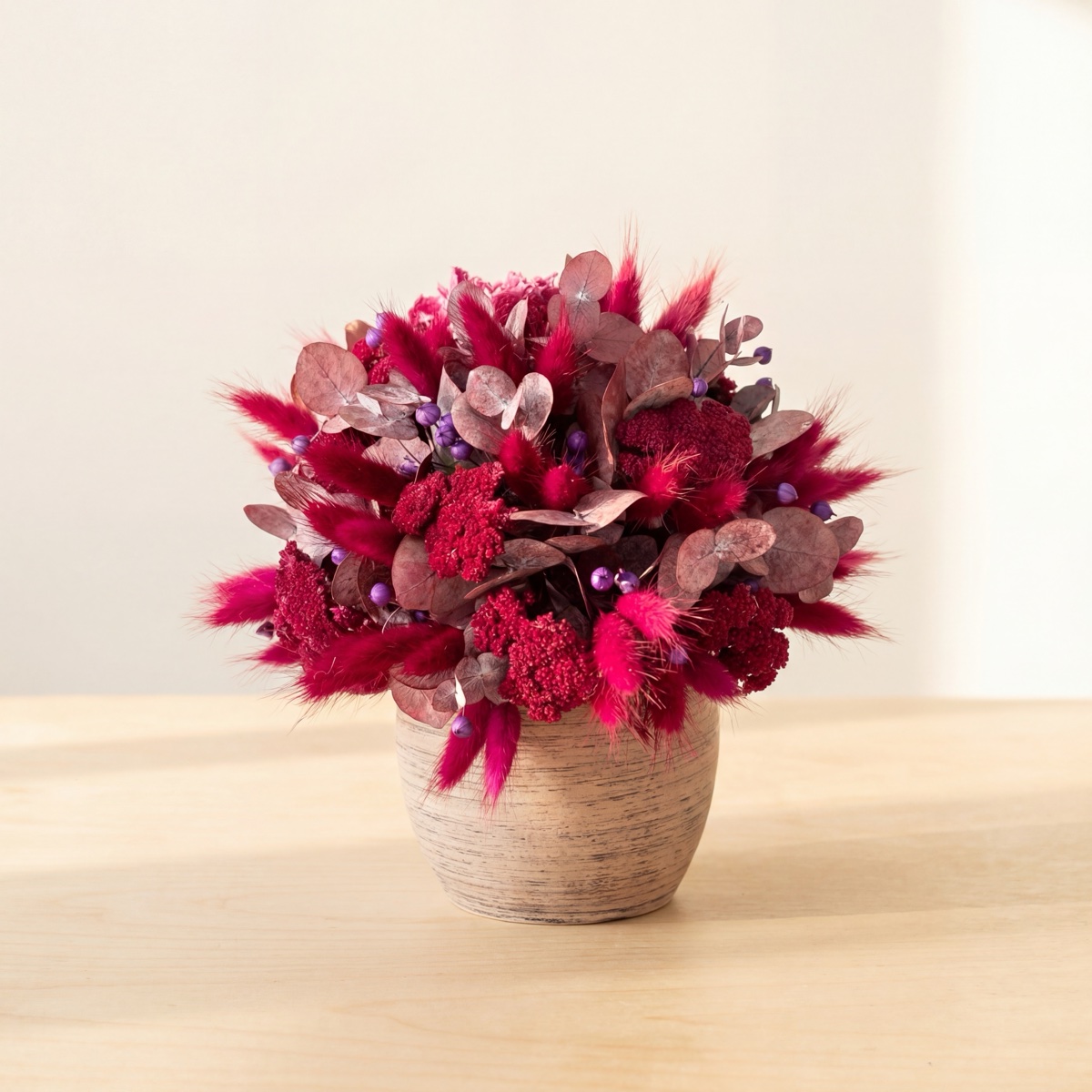
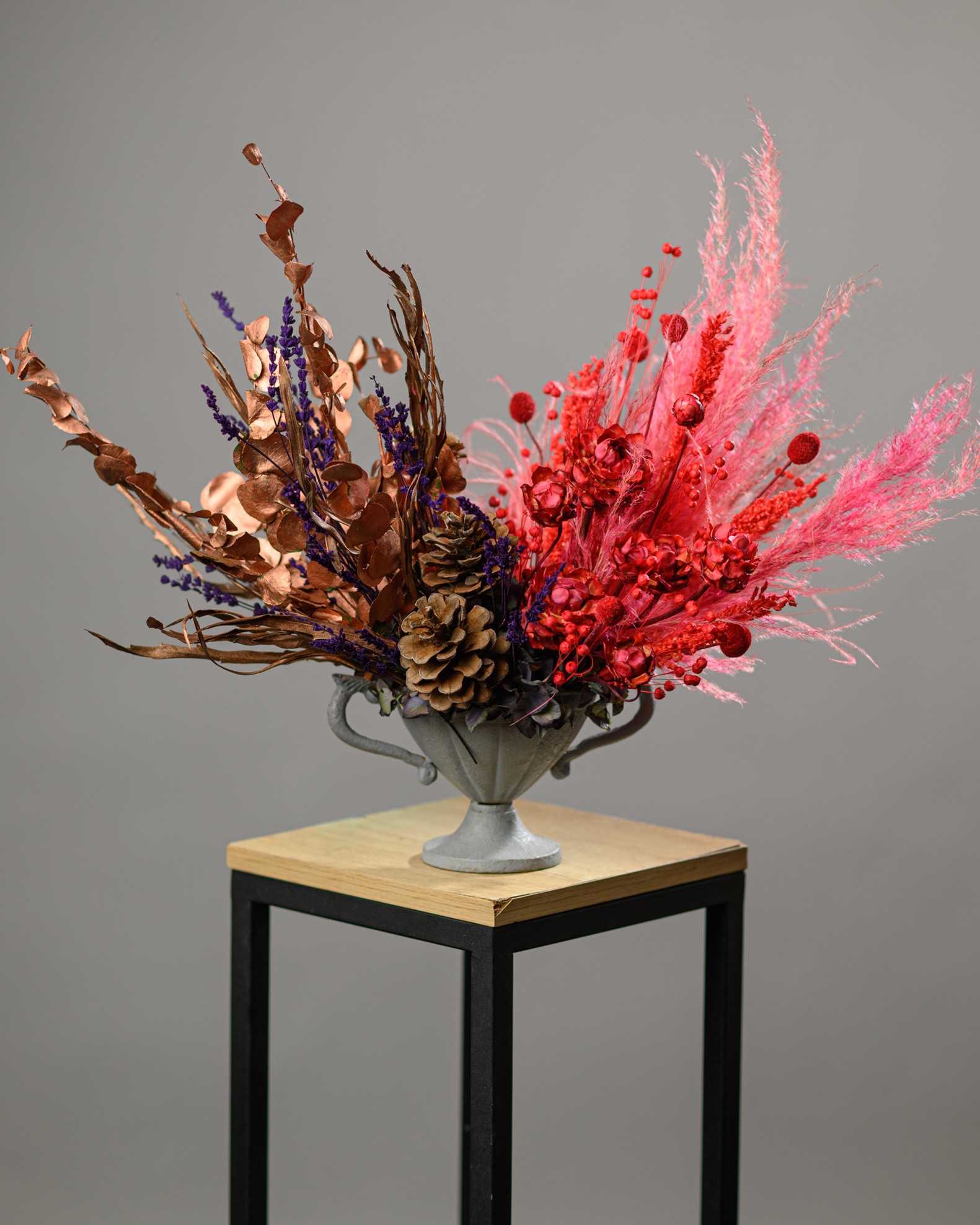
Try this: ask where they would most enjoy flowers. A dining table, side table and shelf suggest different possibilities. Confirm the actual space before choosing or making a piece; the project photographs do not establish its dimensions for you.
Take a cue from the style already there
A gift can feel personal because it responds to something the recipient already loves. Someone who enjoys decorating a wall may be interested in dried flower mirror decor, where the flowers become part of a larger object. An interior wreath on a grapevine base creates its own frame, with an open centre and an asymmetric floral cluster.
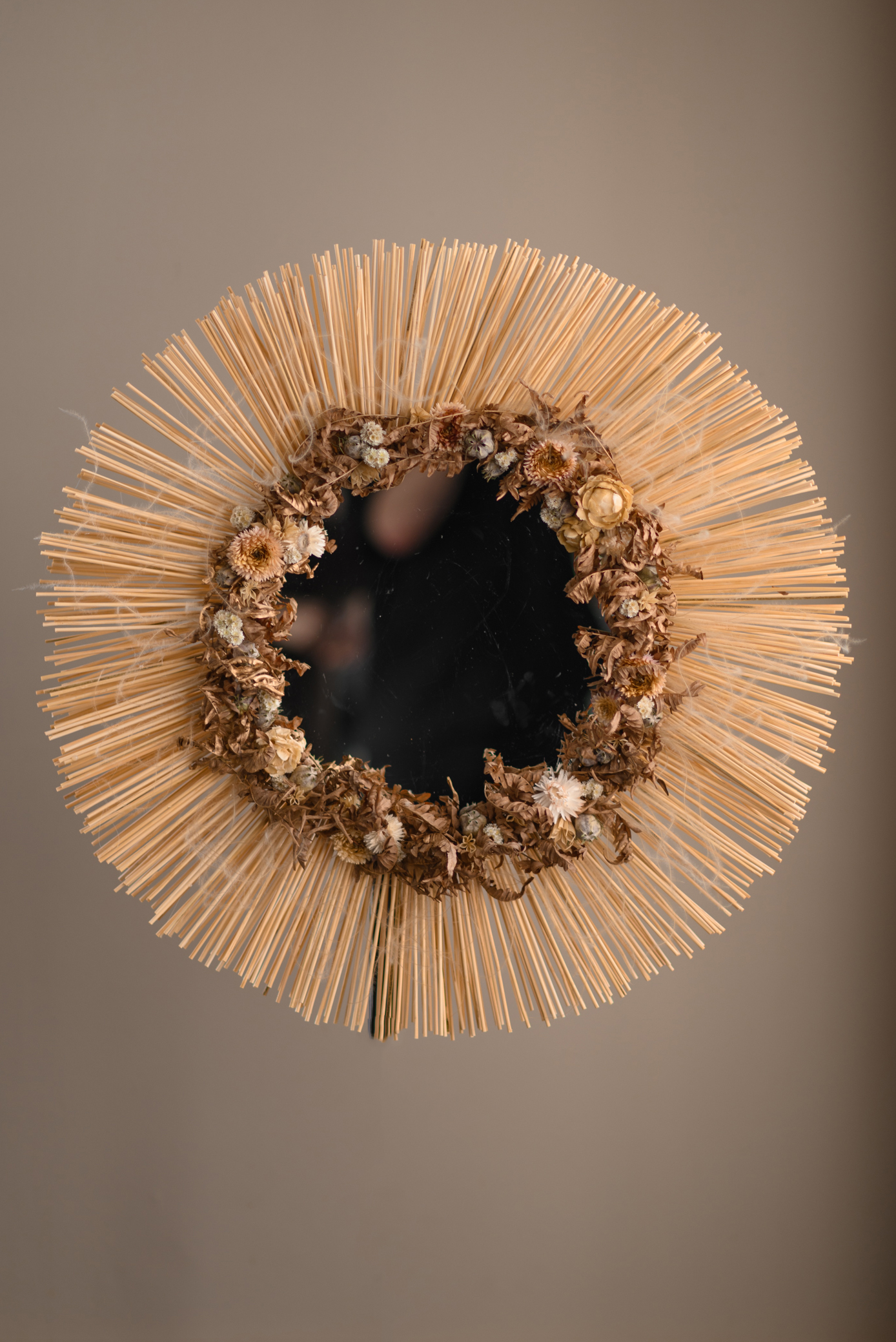
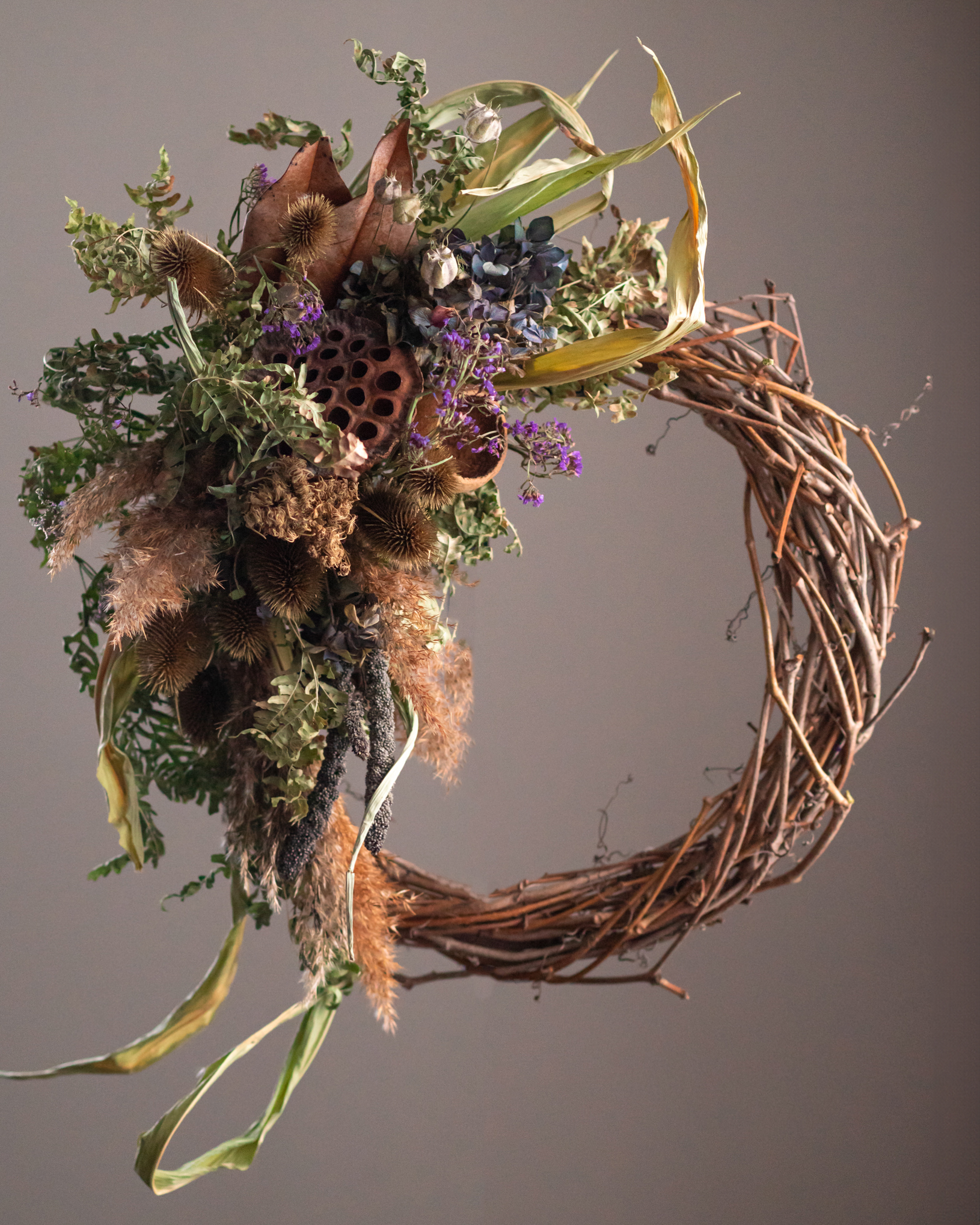
Try this: look for one connection with their existing choices, such as a circular outline or a natural texture. You do not have to match the whole room. If the idea requires a wall position or mounting, agree that part too rather than leaving the recipient to find a place afterwards.
Agree on the space before choosing a statement piece
The most striking idea is not always the easiest gift to receive. A tall floor dried flower arrangement or a large hanging installation may be a useful reference when someone actively wants a more substantial floral feature. Both deserve a conversation about the intended setting before any commitment.
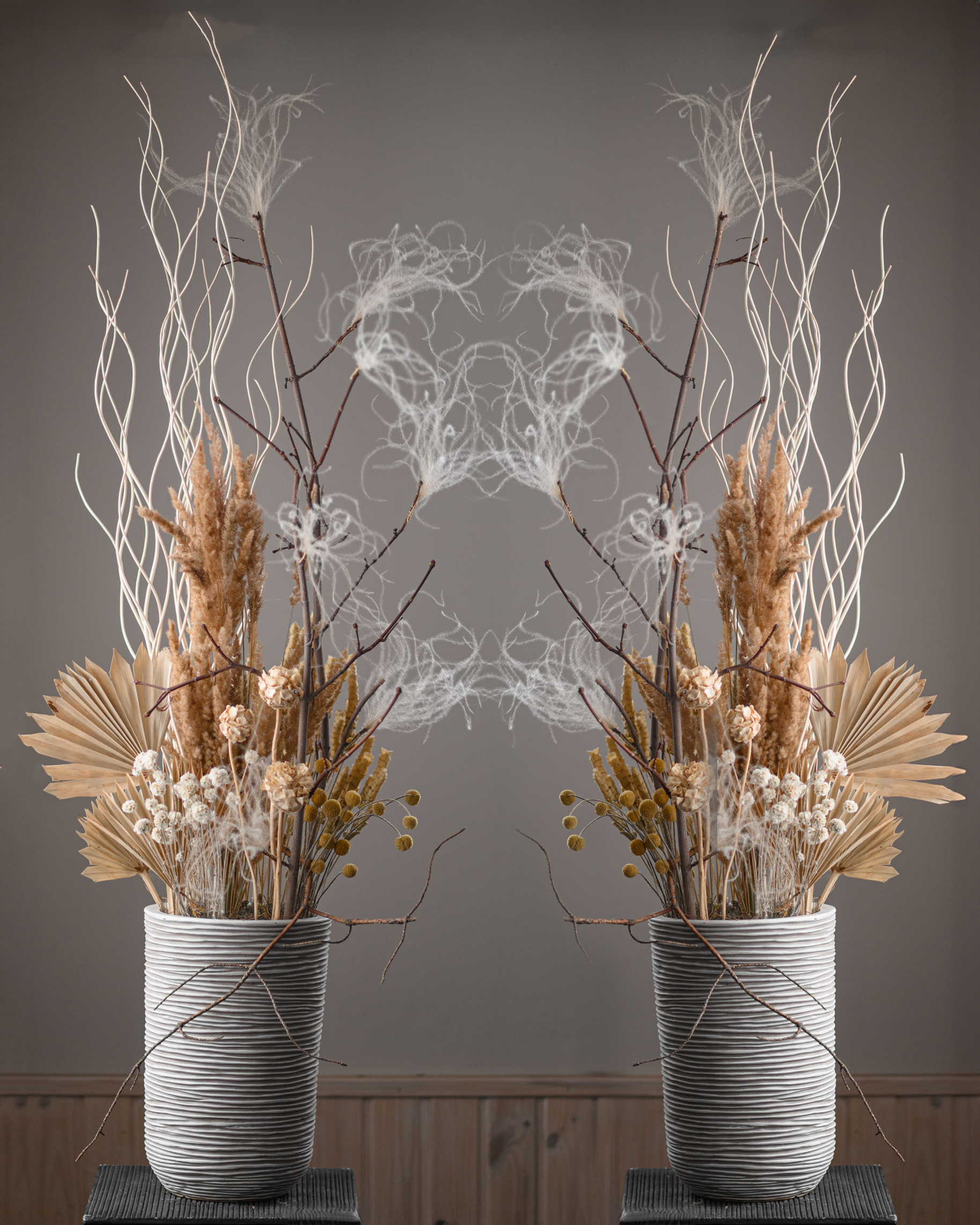
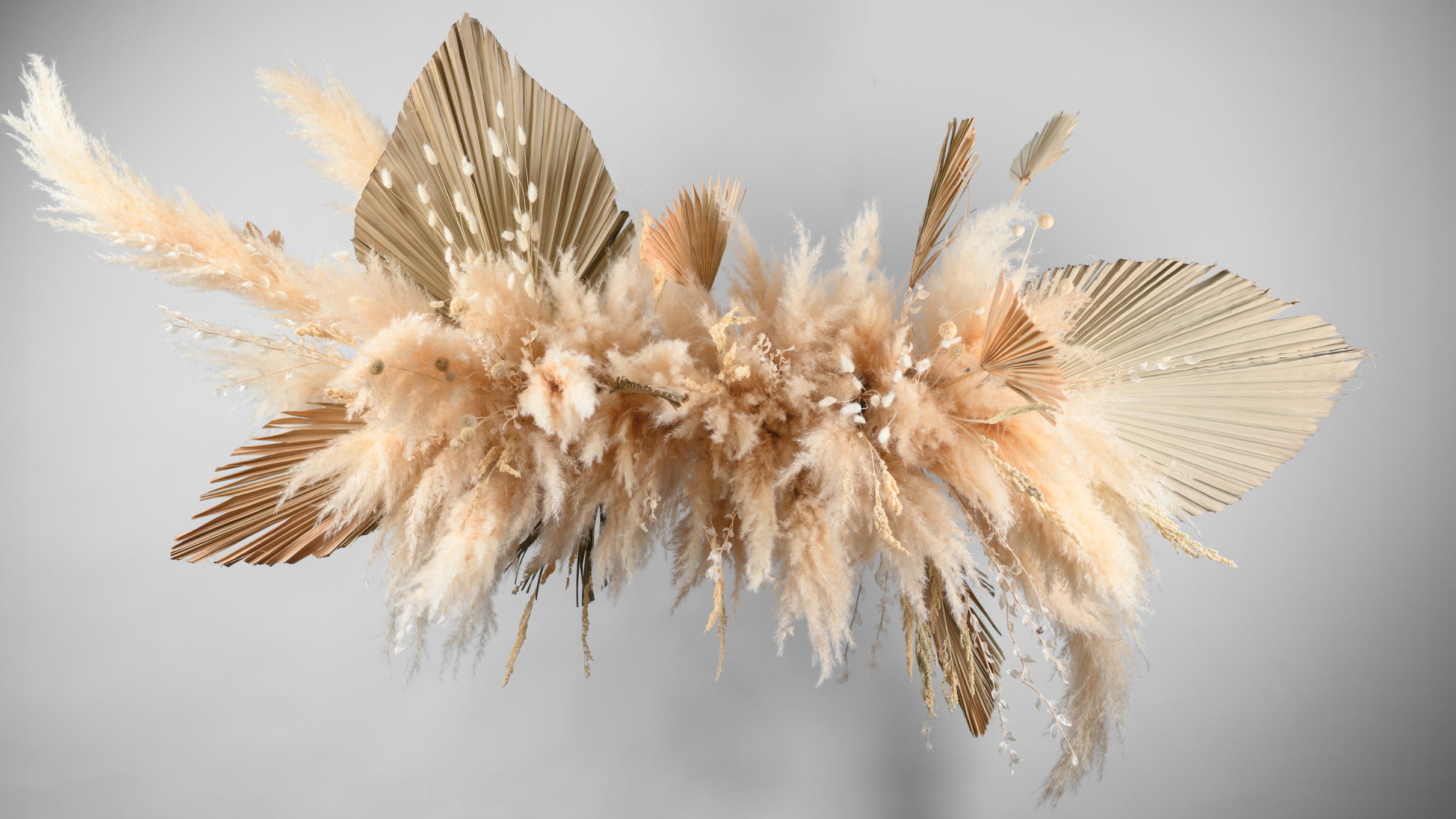
Try this: turn the gift into a shared choice: compare references, agree the location and discuss the practical requirements for the actual object. An overhead installation also needs an appropriate support assessment; the photograph is inspiration, not an installation guide.
A good starting point is simply person, occasion, place, then form. That order helps you move from eleven very different references to a choice with a reason behind it. Keep the recipient in the conversation where the decision affects their outfit or their space. Follow the project that interests you to see it more closely, and let the idea develop from there.